Japanese Chef Knives: A Buyer's Guide by Budget

A Japanese chef knife is usually thinner, lighter, and ground to a more acute edge angle than a typical Western chef knife. Manufacturer specifications commonly cite edge angles around 15 degrees per side, versus roughly 20 degrees for many Western-style knives, which is why Japanese knives are often described as sharper out of the box. For home cooks who do a lot of precision work — thin vegetable slices, fine herb cuts, breaking down fish — that thinner geometry is the main appeal. It comes with tradeoffs, though: many Japanese blades use harder, more brittle steel that chips more easily on bone or frozen food, and some require more careful sharpening. This guide walks through the specs that matter and what buyers commonly report at three price tiers, without pointing to specific current products. Our other Japanese kitchen and food comparisons are built the same way.
Verdict
There is no single knife to point at, because the decision that matters is how much maintenance you will do. For a knife that gets washed and put away, stay stainless: VG-10 appears across price points and is commonly listed at 60–61 HRC. If you will hand-dry and oil the blade after every use, carbon repays it — Aogami and Shirogami are typically specified at 62–64 HRC and described as taking and holding a finer edge, at the cost of rust spotting if left wet.
For a first knife, buying guides and retailers most often suggest a 180mm santoku or a 210mm gyuto; both suit a typical home cutting board. Handle style is comfort, not durability: wa is lighter and shifts balance toward the blade, yo is riveted and closer to a European chef knife.
Price changes construction and finishing more than mechanics — stamped stainless under $100, forged blades with better fit at $100–$200, hand-finished carbon or laminated above $200, a tier aimed at cooks who already keep a whetstone routine. The hardness figures are commonly cited maker-spec ranges, not one manufacturer’s guarantee.
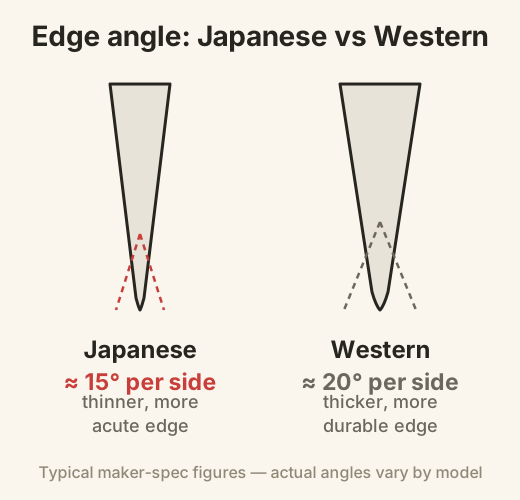
Beyond geometry, weight and balance change how a knife feels in daily use. Many Japanese gyuto and santoku knives run lighter than a comparable Western chef knife because the blade stock itself is thinner, and that lighter weight is often the first thing new owners notice when switching over. None of this means a Japanese knife is a strict upgrade for every cook — it’s a different tool with a different maintenance profile, and the sections below cover the specs worth checking before buying at any price point.
How to choose
Blade steel
Steel choice affects hardness, edge retention, and how much upkeep a knife needs. Three names come up often in maker specs for Japanese knives:
- VG-10: A stainless steel developed for cutlery, commonly listed in the 60–61 HRC hardness range on maker spec sheets. It holds an edge reasonably well and resists rust, which is why it shows up across many price points, from entry-level to mid-range knives.
- Aogami (Blue Steel): A carbon steel alloyed with tungsten and chromium, typically specified in the 62–64 HRC range. Maker literature and user reviews commonly describe it as taking a sharper edge and holding it longer than VG-10, at the cost of needing to be dried and oiled to prevent rust.
- Shirogami (White Steel): A purer carbon steel with fewer alloying elements, often cited around 62–64 HRC as well. It’s frequently described as easier to sharpen to a very fine edge than Aogami, but more reactive and prone to staining or rusting if left wet.
Stainless options like VG-10 suit cooks who want lower maintenance. Carbon steels like Aogami and Shirogami are generally aimed at cooks willing to hand-dry and oil a blade after each use in exchange for edge performance.
Handle: wa vs. yo
Japanese knives are sold with two handle styles:
- Wa-handle: A traditional, usually octagonal or D-shaped wooden handle, unbolted and lighter, designed to balance the weight toward the blade. It’s the traditional choice on many higher-end Japanese knives.
- Yo-handle: A Western-style handle, typically bolstered and secured with rivets, closer in feel to a European chef knife. It’s common on knives marketed as an easier transition for cooks used to Western handles.
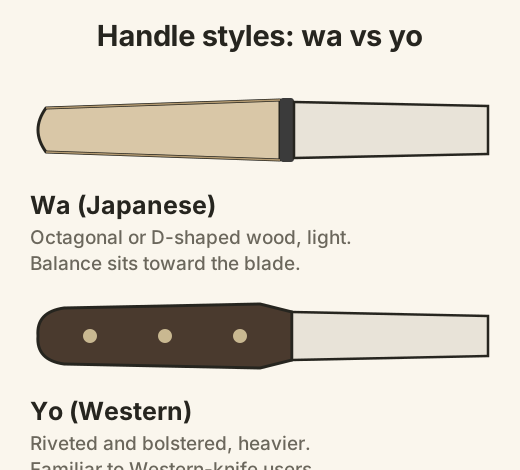
Neither is objectively better; it’s a matter of grip preference and how much the knife’s balance point should sit toward the blade versus the handle. Wa-handles are also generally easier and cheaper to replace if damaged, since they’re a simple friction-fit tang rather than a riveted assembly — something worth checking in maker documentation if long-term repairability matters.
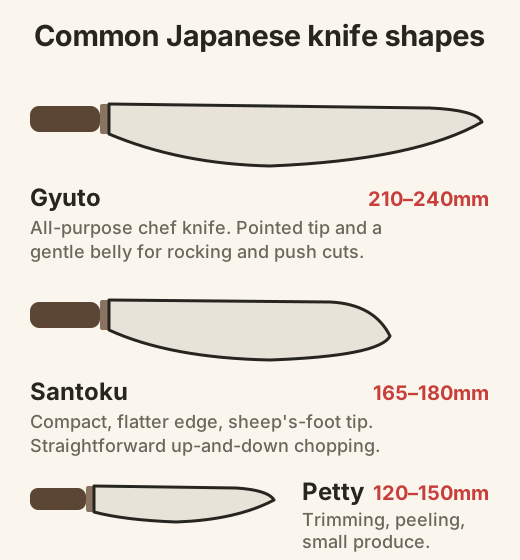
Shape: gyuto, santoku, petty
- Gyuto: The Japanese equivalent of a Western chef’s knife, usually 210–240mm, with a pointed tip and a gentle curve suited to rocking and push cuts alike. It’s the most versatile single knife for a home kitchen.
- Santoku: Shorter, usually 165–180mm, with a flatter edge profile and a sheep’s-foot tip. It’s often recommended as a first Japanese knife because of its compact size and straightforward up-and-down chopping motion.
- Petty: A small utility knife, typically 120–150mm, used for trimming, peeling, and small produce — the Japanese analog to a paring knife.
Budget tiers: what to expect
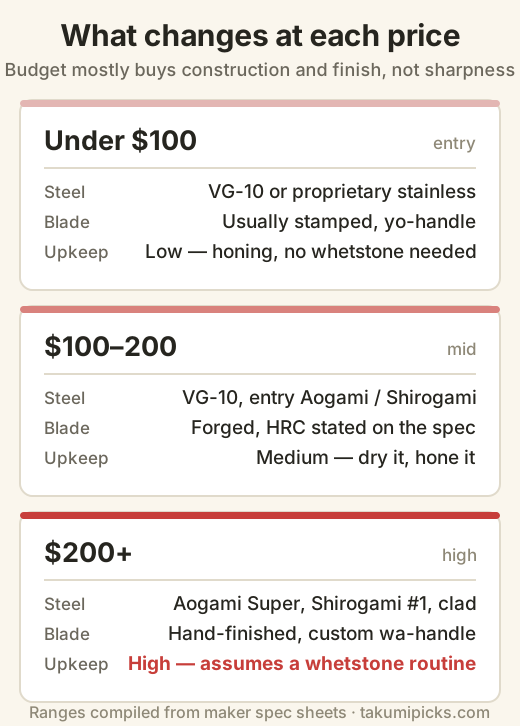
Under $100
At this tier, maker specs typically show stamped (rather than forged) stainless blades, most often VG-10 or a comparable proprietary stainless alloy, paired with a yo-handle. User reviews commonly report that these knives arrive reasonably sharp but need more frequent honing than pricier options, and fit and finish (handle gaps, spine grinding) is less consistent. Worth checking on the spec sheet: stated steel type, whether the blade is stamped or forged, and blade length relative to your counter and cutting board space.
$100–$200
This range commonly includes forged blades, wider use of VG-10 or entry Aogami/Shirogami, and better handle fit. Maker specs at this tier more often disclose a specific hardness (HRC) rating and sometimes a named smith or workshop, rather than a generic “Japanese steel” label. Reviewers in this range frequently mention noticeably better out-of-box sharpness and edge retention compared to sub-$100 knives, along with more attention to spine and choil finishing. Worth checking: HRC rating, whether the edge is single-bevel or double-bevel (most Western-style gyuto and santoku are double-bevel), and warranty or sharpening-service terms from the maker or retailer.
$200+
Above $200, spec sheets more often list traditional carbon steels (Aogami Super, Shirogami #1) or laminated/clad constructions — a hard core steel sandwiched between softer cladding layers for toughness. This tier frequently includes hand-finished details: custom wa-handles, hammered (tsuchime) finishes, and individually inspected blades. User reviews at this price point tend to focus less on sharpness out of the box — which is expected to be excellent — and more on fit, balance, and the maker’s sharpening or after-sales support. This is generally the tier aimed at cooks who already maintain a whetstone routine, since the steels used are less forgiving of neglect than tier-one stainless options.
Steel comparison
| Steel | Hardness (HRC) | Edge retention | Rust resistance | Sharpening difficulty |
|---|---|---|---|---|
| VG-10 (stainless) | 60–61 | Good | High | Moderate |
| Aogami / Blue Steel (carbon) | 62–64 | Very good | Low | Moderate to hard |
| Shirogami / White Steel (carbon) | 62–64 | Good to very good | Low | Easier to sharpen, but reactive |
Figures above are commonly cited ranges from maker spec sheets and knife-steel references, not a single manufacturer’s guarantee — actual hardness varies by heat treatment and individual maker. If a maker publishes a figure outside these ranges, our contact page takes corrections.
Care basics
- Hand-wash only: Japanese knives, especially carbon steel ones, are not dishwasher-safe. Maker instructions typically call for hand-washing with mild soap and drying immediately.
- Honing between sharpenings: A honing rod or a few passes on a fine whetstone helps realign the edge between full sharpenings. Because many Japanese blades are harder and thinner than Western knives, some makers specifically recommend a ceramic or fine-grit honing rod rather than a coarse steel rod, to avoid chipping.
- Storage: A saya (wooden sheath), knife block, or edge guard is commonly recommended over a loose drawer, both to protect the thin edge and to prevent accidental cuts.
- Drying carbon steel: For Aogami or Shirogami blades, reviewers and makers alike stress drying the blade fully — and for some, applying a light coat of camellia (tsubaki) oil — after each wash to prevent rust spotting.
FAQ
Do I need to learn to use a whetstone to own a Japanese knife? Not necessarily. Many entry-level VG-10 knives can be maintained with occasional professional sharpening or a pull-through sharpener rated for Japanese edge angles, according to maker guidance. Whetstone sharpening becomes more relevant as steel hardness increases, particularly for carbon steel knives in the $200+ tier.
Is a Japanese knife better than a German or French chef knife? Neither is universally better — they reflect different design goals. Japanese knives are typically ground thinner and harder for precision cutting, while many Western knives use softer, tougher steel suited to heavier tasks like breaking down bone-in cuts. The right choice depends on the kind of cutting a cook does most.
What size should a first Japanese knife be? For most home cooks, a 180mm santoku or a 210mm gyuto is commonly recommended as a first purchase, based on the sizes most frequently suggested in buying guides and retailer recommendations, since both suit a typical home cutting board without feeling unwieldy.
Summary
Choosing a Japanese chef knife comes down to matching steel, handle, and shape to how much maintenance a cook is willing to do. Stainless steels like VG-10 suit lower-maintenance kitchens, while carbon steels like Aogami and Shirogami reward a regular drying and sharpening routine with sharper, longer-lasting edges. Budget mostly changes construction quality and finishing rather than the basic mechanics of the knife: expect stamped stainless under $100, forged blades with better fit in the $100–$200 range, and hand-finished carbon or laminated steels above $200. Checking the maker’s stated steel type, hardness, and bevel before buying is a more reliable way to compare options than price alone. Shape and handle style matter less for durability than for day-to-day comfort, so it’s worth thinking about the cuts done most often — rocking through herbs, chopping vegetables, breaking down proteins — before settling on a gyuto, santoku, or petty as a first purchase. None of this is a first-hand review: it is assembled from maker specifications and published user reports, which is the spec-based approach behind every guide here.
One thing that is easy to miss when ordering direct from a Japanese retailer: the sticker price is not the landed price. The United States ended the de minimis exemption that used to let low-value parcels enter duty-free, so import charges now apply to small shipments from Japan. We worked through what that does to a monthly parcel in our Japanese snack box comparison, and the same arithmetic is worth running before committing to a knife in the $200+ tier.
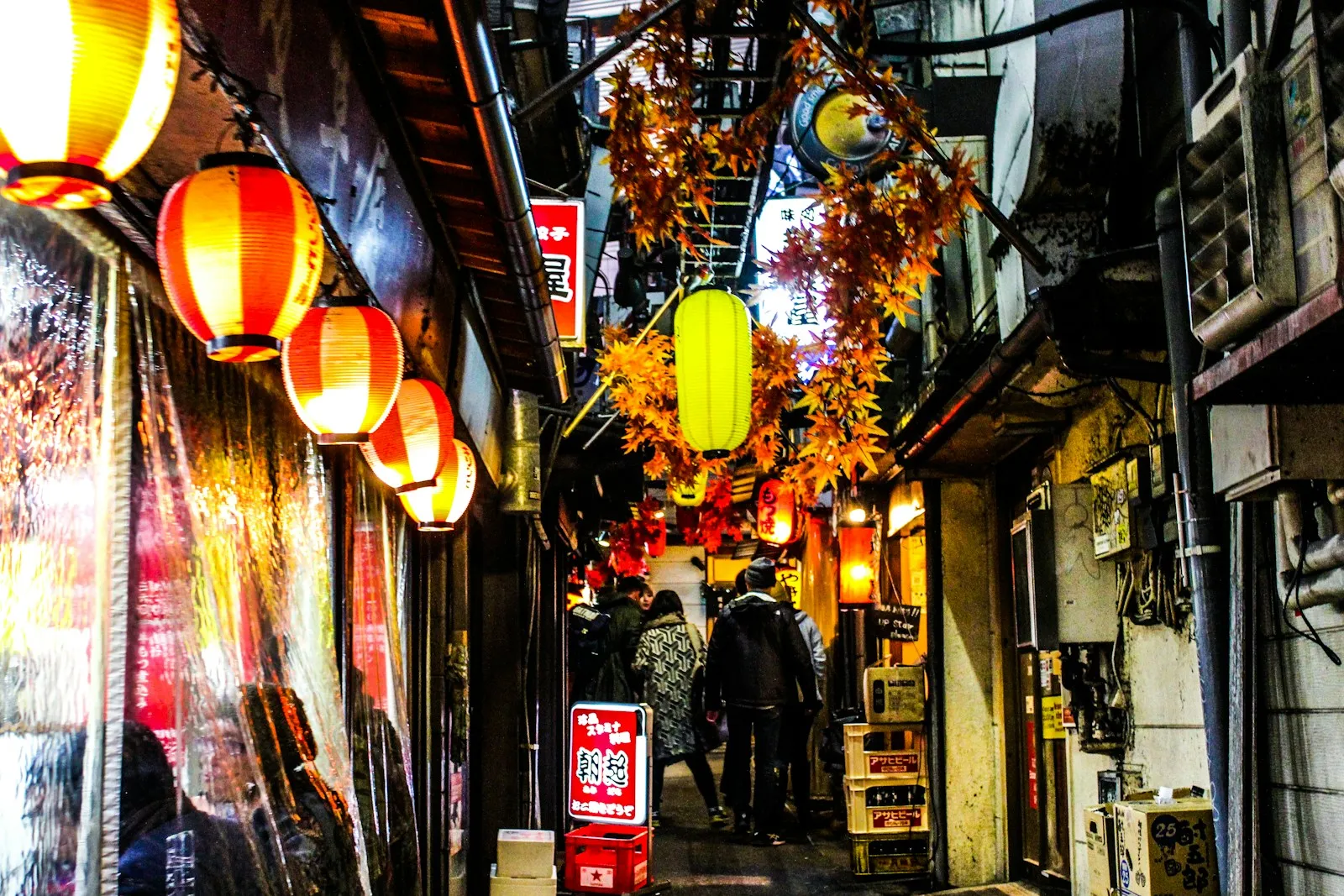
If the plan is to buy in person in Japan instead — Kappabashi in Tokyo and Sakai in Osaka are the usual destinations — the practical prerequisite is getting online on arrival, since maker and shop information is mostly in Japanese. Our comparison of Japan eSIM plans covers what to set up before you fly, and sits under Japan travel with the trip-planning comparisons.
Food is the easier thing to carry back from the same trip, though the regional sweets in those station shops are tied to the prefecture they come from and awkward to find once you are home.